Why Reach the Outdoors Exists
Reach the Outdoors helps people with disabilities and mobility challenges better understand whether an outdoor recreation site will work for them. Starting with Pennsylvania fishing, the project brings together practical accessibility details so users can plan with more confidence and less guesswork.
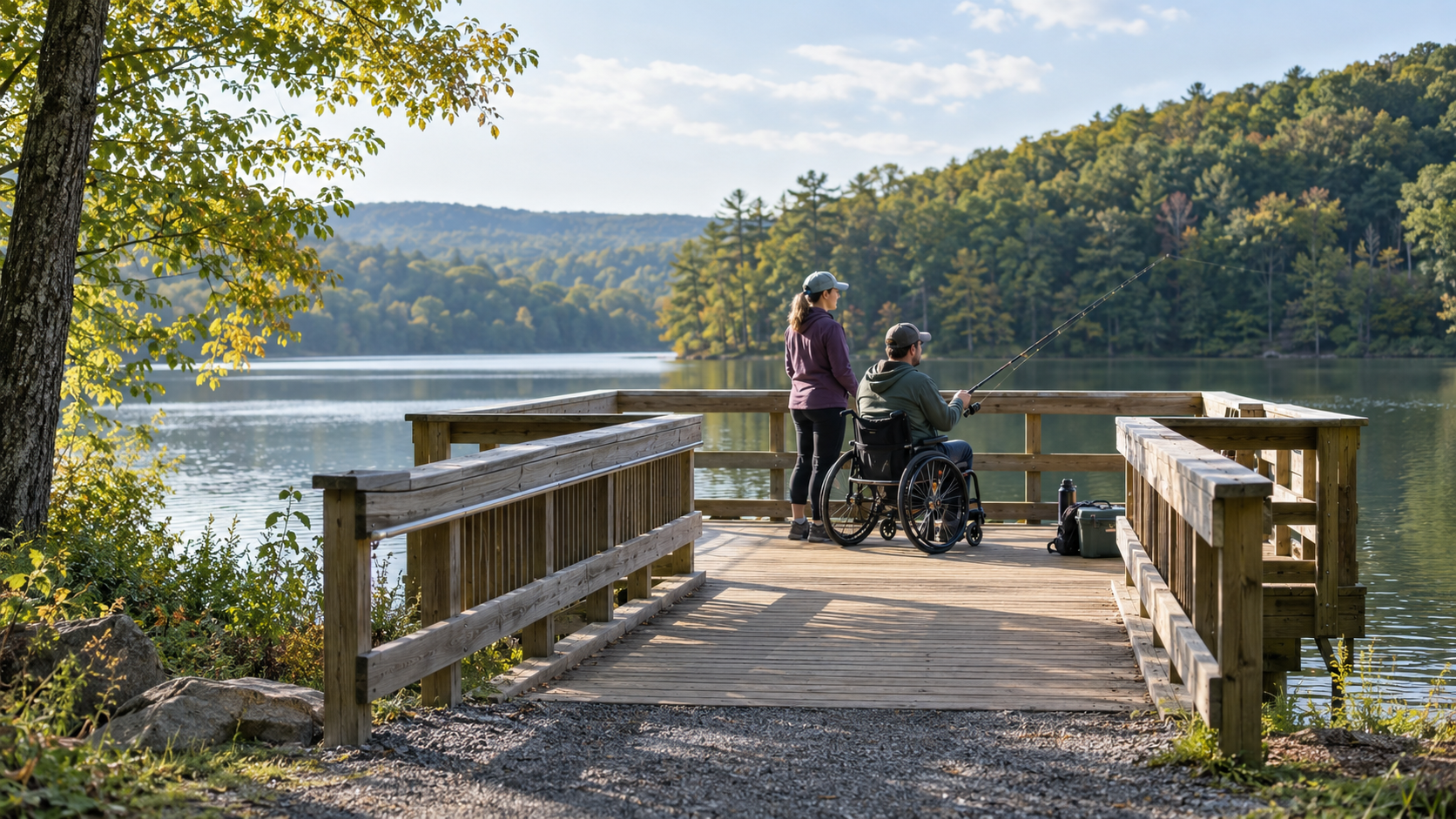
For many people, planning a day of fishing, hunting, or exploring outdoors is fairly simple. Pick a place, check the weather, pack some gear, and go.
For someone with a disability or mobility limitation, there’s another question:
Will this place actually work for me?
A website might describe a fishing area as accessible. A park map might show a paved trail. A boat launch might list accessible parking. But those facts rarely tell you what you really need to know.
How far is it from the parking area to the water? Is the path paved, gravel, grass, or uneven ground? Is there a steep slope? Is there enough room to maneuver a wheelchair at the fishing platform? Are benches or accessible restrooms nearby? Could someone who uses a walker comfortably get there?
Finding answers often means piecing together information from several sources—or arriving without knowing what to expect.
Reach the Outdoors is being built to make that planning easier.
Accessibility Is More Than a Checkbox
Outdoor recreation websites often describe locations with broad terms such as accessible or ADA accessible. Those labels can be helpful, but they don’t tell every visitor whether a location will meet their needs.
A person using a power wheelchair may need something very different from someone who walks with a cane. Someone with limited endurance may care most about distance and places to rest. Another person may be able to navigate a location if a family member or friend can assist.
So the useful question isn’t only:
“Is this location accessible?”
It’s:
“Will this location work for me?”
Reach the Outdoors is built around that question.
What Reach the Outdoors Is
Reach the Outdoors is an emerging website designed to help people with disabilities and mobility challenges find and evaluate outdoor recreation opportunities.
We’re starting with fishing in Pennsylvania, with the potential to expand into hunting and other outdoor activities.
Rather than simply listing places to go, Reach the Outdoors aims to provide the practical details someone needs to decide whether a trip makes sense for them.
Those details could include:
* Accessible parking * Distance from parking to the activity area * Trail or pathway surface * Terrain and slope * Fishing platforms and piers * Restrooms * Seating and rest areas * Boat-launch accessibility * Potential obstacles * Nearby amenities * Firsthand observations from visitors
As the project develops, people could also compare locations based on the accessibility features that matter to them.
Where AI Can Help
Useful outdoor accessibility information already exists. The problem is that it can be scattered across park websites, government databases, maps, recreation guides, and facility descriptions.
Reach the Outdoors is exploring whether artificial intelligence can help organize that information and make it easier to use.
Instead of researching several websites, someone might eventually be able to ask:
“Where can I fish within an hour of Harrisburg if I use a wheelchair and need a paved path from the parking area?”
Or:
“Which fishing locations near Gettysburg have short walking distances and places to sit?”
AI shouldn’t decide whether a place is safe or accessible for someone. Conditions change, source information can be incomplete, and individual needs vary.
Its role should be more practical: find relevant information, organize it, make uncertainties clear, and help someone make a more informed decision.
Better Information Creates More Possibilities
Public agencies, adaptive recreation organizations, volunteers, families, and advocates are already doing important work to make the outdoors more inclusive.
Reach the Outdoors can help make those opportunities easier to find and understand.
Sometimes the biggest obstacle to planning a trip is simply not knowing what you’ll encounter when you arrive.
Where do I park?
How far is the water?
What is the path like?
Is the fishing platform actually usable for me?
Can I find a restroom nearby?
Clear answers can make the difference between ruling out a trip and feeling confident enough to try it.
Starting Small
Reach the Outdoors is still being developed.
The first version will focus on Pennsylvania fishing locations and on learning which details people need most when planning an accessible outdoor trip.
Information will come from public sources, and some locations may eventually be visited and documented firsthand. Input from people with disabilities, families, outdoor organizations, and recreation professionals will also help shape what the site becomes.
The aim isn’t to build the biggest database of outdoor destinations.
It’s to build one people can trust and actually use.
Help Us Build It
If you use adaptive equipment, have experience navigating outdoor recreation with a disability, work with an adaptive outdoor organization, or know of an accessible fishing location worth documenting, we’d like to hear from you.
Reach the Outdoors starts with a straightforward idea:
People should be able to understand what they’ll encounter before they leave home.
A little better information can make it easier to plan the trip, choose the right place, and spend more time doing what matters.
Getting outdoors.